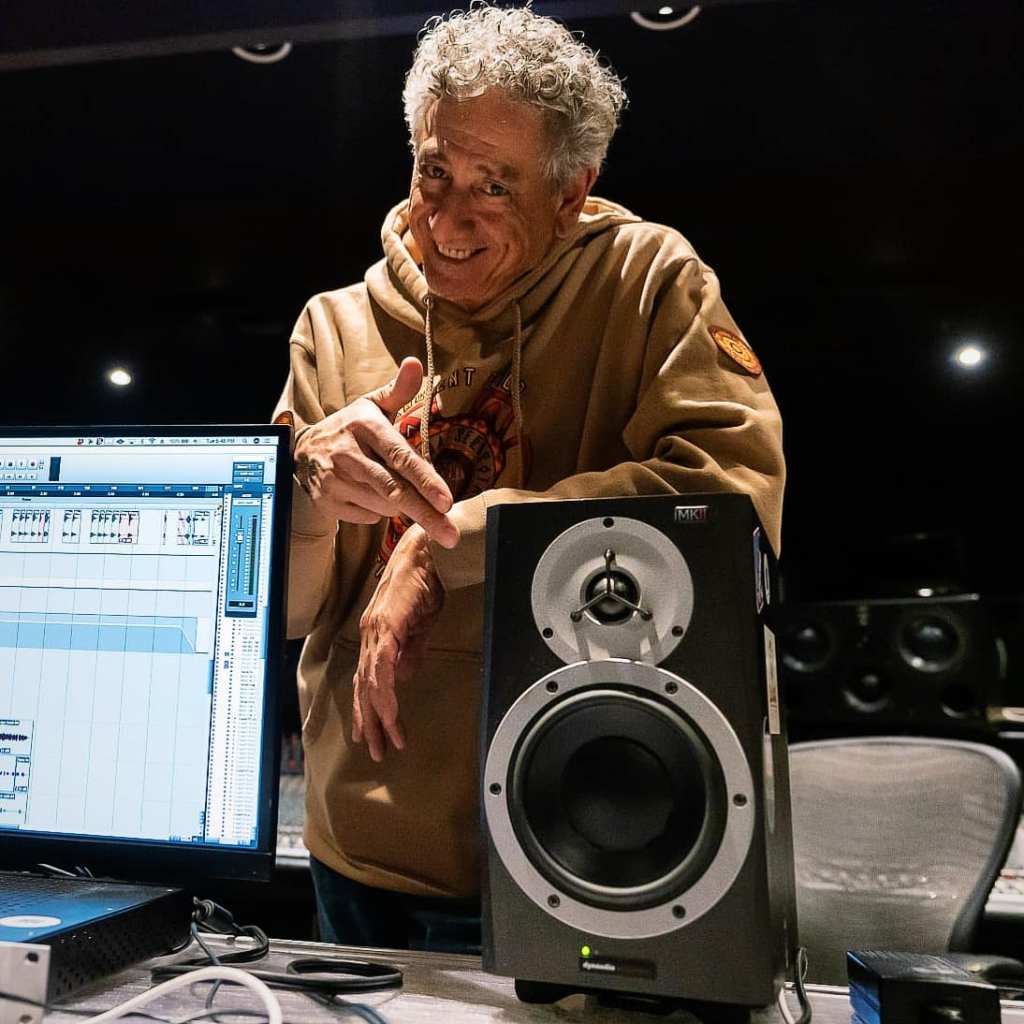
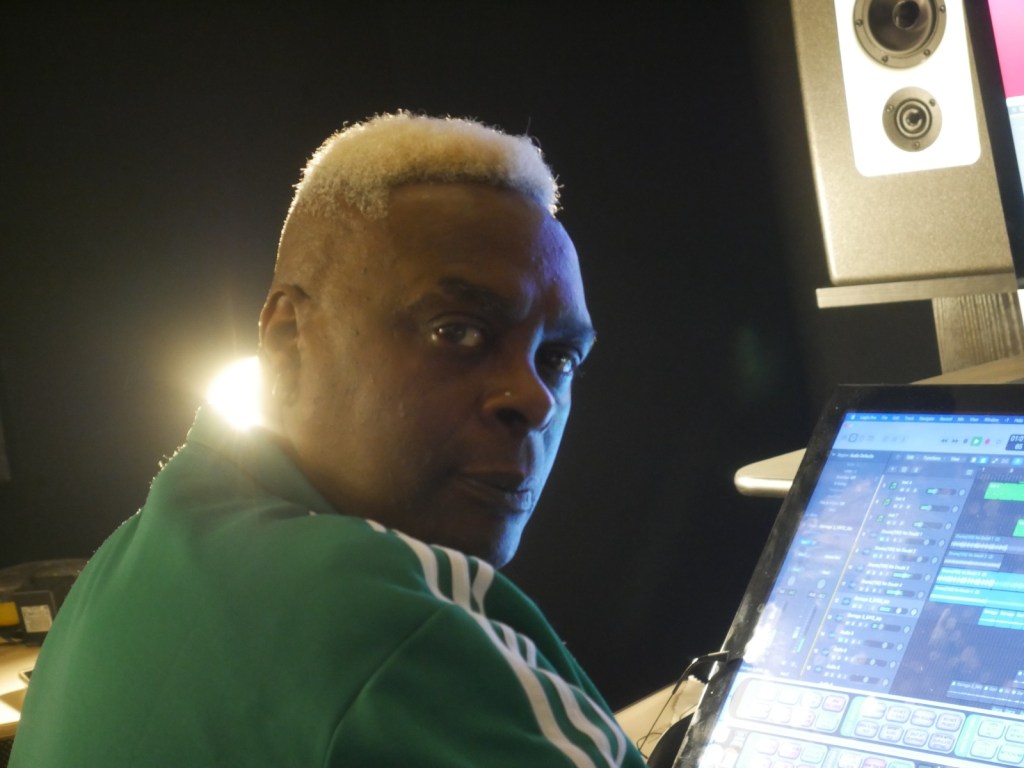
I’ve always been captivated by the magic behind the music—the unsung heroes who bring songs to life from behind the scenes. So, when I had the chance to sit down with James ‘Bonzai‘ Caruso, the legendary recording and mixing engineer with six Grammy wins to his name, I knew I was in for an extraordinary experience.
JEN: Let us start at the beginning. You mentioned you were 17 years old when you started this studio engineering journey. What sparked your interest in this field?
BONZAI: As a young teenager, I was a guitar player. I was studying guitar and listening to lots of records and I was fascinated by the quality and the sound and placement of instruments. My hearing just picked up on each individual, part and arrangement of the songs, especially growing up in the ‘70s. There was great music in the ‘70s. But when I graduated high school at the age of 17, I grew up in the countryside in New Jersey, and I worked on horses, on horse farms, and I had to care for chickens and hundreds of acres of farmland. So I went right to New York City, which is about an hour and a half away, after I graduated high school. I signed up for a course at the Institute of Audio Research, which was part of NYU at the time. After a couple of months in school there at NYU, I was placed in an internship at a recording studio called Secret Sound Studios, which would have been previously owned by Todd Rundgren. When I first started as an intern, they paid me $5 a day. I worked 90 hours a week.
JEN: At least you got paid something. A lot of interns don’t get paid.
BONZAI: I got a sandwich every day. I just dug into learning, how to use microphones, and the patch bay, and how to use compressors and equalizers and reverbs. I just was a sponge soaking it up. I was very fortunate to have that opportunity.
JEN: So, who was your biggest influence in the world of audio?
BONZAI: At that time, I was a big fan of the band Yes, from the UK, and later when I was an intern at the studio, Trevor Horn became a producer. He did that record, “Owner Of A Lonely Heart” from the album “90215” and I was just completely blown away by the sound quality, by the production, by the mixing, the use of samplers. Sampling was a brand new thing then. We had the emulator and a couple of other keyboard samplers at this time, that were fresh on the scene, and he was utilizing samples, and I was just so inspired. Trevor Horn was a really major influence on me.
JEN: Can you describe a typical day in the life of a studio engineer?
BONZAI: No!! Because there is no typical day. Every day is different, and it really depends on the project. It depends on if we’re recording, if we’re mixing, if we’re editing, or overdubbing. So if it’s a typical day of tracking, it’s setting up microphones for
drum kit, bass, guitars, amplifiers, and singers, In a live situation, recording a band, that would be a typical day. In an overdub session, when you already have tracks laid, you might be just setting up to overdub strings or horn section, or possibly vocals. In a mixing scenario, a typical day would be coming in, and tracks have already been produced and recorded. I would just be focusing on mixing, so a typical day in a mix session would be just be blending and balancing and getting a good mix.
JEN: Do you get whole bands in the studio at one time?
BONZAI: I look forward to those, especially with Stephen and Damian (Marley), especially with Stephen Marley, and we’re tracking his band, or any band, for that matter. I just love tracking live drums, bass guitars, live instruments, with 6,7,8 people in the room. That vibe, I just love it so much. Unfortunately, in the last five or ten (years), especially the last five years since the pandemic, I haven’t been doing very many of those sessions, and I miss it, because those are my favorite sessions.
JEN: What are the biggest challenges you face in your work, and how do you overcome them?
BONZAI: The biggest challenges today is, I mean, there’s been a lot of challenges over the years, but most recently, in the last decade or so it has been the volume wars. Everyone wants everything so loud, so it’s always, push, push, you know, and that’s one of the most challenging things, ‘cause I love dynamics. I love when songs get quiet, and they build, and they get louder and they get quiet again. So much of today’s music is just so in your face, and that’s fine, I mean, I’m embracing it, and I’ve gotten good at it, but it’s one of my least favorite things, so it is challenging. One of the other challenging things is when I get sessions that have been recorded wherever, Jamaica Australia, Europe, and they’re not recorded that well, and I’ve got to polish that, you know what I mean. That’s a big challenge ‘cause now I’m doing a lot of fixing before I start mixing. I’m hired to do the mixing, and now I’ve got to fix the drums, fix the timing, ‘cause the bass player’s not on time, or the guitar player’s off, or the singer’s out of key. Pitch correction.
JEN: I know that must be a challenge. I can hear things, I can’t do it myself but I can hear when it’s off. It hurts my ears. People laugh at me when I say that, and I say, “No, it physically hurts my ears”
BONZAI: Yeah, it’s not fun.
JEN: I’m glad somebody else feels that.
BONZAI: I can hear. It can be the bass, a guitar, be one string on a guitar, it
could be the vocalist, it could be anything. Like, “ No, that’s not right”.
I’ve worked with Cher, she has perfect pitch. Some other people I’ve worked with, keyboard players, and string players that have perfect pitch, and it’s really a gift.
JEN: What are some of the key pieces of equipment or software that you rely on?
BONZAI: I’m an analog fanatic. I love working with analog stuff, but the key components that are most important are equalizers, compressors, reverbs and delays. I would say those four. Now in the software that’s around, plug-ins. A lot of these plug-ins are designed to emulate the old tube equipment from the 60s and 70s. But yet, I would say the equalizers, compressor, reverbs and delays are the most important pieces. Another extremely important piece of equipment is your monitor, your speakers. The quality of your speakers, of what you’re listening to, depending on how true they are, is very, very important because then it translates accurately. If you’re hearing a lot of bass and treble, when everything’s balanced really nice, but then you go in your car and it sounds like mud, then it’s lying to you, and it’s not going to translate. Speakers are very important. The key is to make it sound good on everything, yeah that’s the key.
JEN: Can you share a specific technical tip or trick that you used to achieve a particular sound or effect?
BONZAI: Oh! There are so many.
JEN: Do you have one that’s specific to you, that you use?
BONZAI: I don’t know about specific to just me because a lot of these tricks have been tried and true and have been around for you a long time. They’re just concepts and ideas and tricks, if you will, that work, for instance, side-chaining compression, so that certain instruments will get out of the way of other instruments when they play. You will send a signal to it to kind of duck the other thing when it plays, and then it comes back, so they make room for each other. It’s called side-chaining and ducking.
JEN: That’s cool.
BONZAI: Yeah! That’s a really cool technique to use when things are fighting each other, and they’re both fighting for the same space, but you want one to be more apparent than the other, and you just send that one to attenuate, to lower the volume of the other one. It’s been around for a while. It’s also in the analog role. It’s been around. JEN: I’m going to ask you a controversial question. What do you think of the use of auto tune, the way it’s being used now?
BONZAI: Auto tune. I don’t know. It’s a love-hate relationship. It’s a useful tool for certain things. It’s a great effect, even if you don’t need it on a singer. I used it on Cher. I worked on that “Do you believe in life” song, ( “Believe” from her 1998 album “Believe”) I did her live concerts with that.
JEN: Wasn’t it Cher who brought it to the forefront?
BONZAI: But she didn’t need it. It was an effect. She has perfect pitch. We were just using it as an effect because it was a new box, it was a new toy, it wasn’t software yet, it was an actual piece of gear. I did Jay Leno’s show with her and David Letterman and a bunch of TV talk shows and some live shows. I used to bring it with me and have her with two microphones, one set at normal voice and one with the effect and then when she wanted to go to the effect, it was up to her. So she had to remember to put tape on them to say “This one for the effect, this one for normal”. I still love using auto tune in that regard, but not on everything. But then, as you know, a lot of artists rely on it, they use it on full-tilt stun mode all the time, and it is what it is.
JEN: Then there are artists that use it because they can’t sing.
BONZAI: And then there’s that.
JEN: But what about when they go live?
BONZAI: They’ve developed a live version of it now, that works in real-time, so they can use it on stage now, too, even if they do sing off-key.
JEN: How do you handle technical difficulties during a session?
BONZAI: One of my specialties. I was dealing with one today and last night. They always come up. I’ve really gotten good at tracing the signal, you know, troubleshooting and finding the source. So I can detect where it’s coming from, I use a process of elimination, to track it down, to track the signals to where there’s the problem. You know it’s not from the source, you know it went from here to here, to here, to here. The problems right there, so you’ve finally traced it. You just backtrack, and you find where the problem is, and you fix it.
JEN: Do you have a memorable troubleshooting story?
BONZAI: Oh, gosh, oh gosh, yeah, I do. I’ve got so many. Back in the day, I was doing Bob Marley’s “Chant Down Babylon” remix album with Stephen and Damian (Marley). I had to take Bob Marley’s original analog two-inch tape, multi-tracks, regional ones, and put it into the computer so we could chop up his vocals, put a new beat, and have guest vocalists. We had Erica Badu on one, and Aerosmith and a whole bunch of different artists featured on every different song on that album. So our multi-track machine is set up in the head stack for the heads to play back. The multiple tracks are set up in banks of eight, so you went 1 through 8, 9 through 16, and 17 through 24. So all those channels would come up on the board. That’s the original tapes, so I couldn’t play it too many times, it’s falling apart as they play. So what you do is you bake the tape in the oven at 400 degrees for about 6 hours.
JEN: That would scare me.
BONZAI: It adheres the metal particles of the tape to the myelar backing, so you can get some plays out of it before it falls off and is gone forever.
JEN: Wow!
BONZAI: I was under a lot of pressure to make it happen. So I was doing it, and the tape machine, the multi-track machine, was only playing back 1 through 8, 9 through 16 but it wasn’t playing back 17 through 24. So I’m missing eight tracks and some of those are Bob Marley’s vocals, and some of them were bass, for different songs. I’m like, “Oh my God! What am I gonna do? We’ve gotta get another machine in here or something.” Then I came up with a brilliant idea. I would transfer the 1 through 16, and then I turned it upside down and played it backwards, 1 through 8 was now 17 through 24 backwards, so I put it in the computer backwards and then flipped it forwards in the computer and lined it up. Everyone was like, “What did you just do?” I had to find a workaround at two o’clock in the morning and where were we gonna get another machine. We’re in a studio in Miami, and I’m like, “What am I gonna do? I don’t have channels 17 and 24, they’re not playing back. I’ll start over. It’ll be 1 through 8, but it’ll be backwards but in the computer it will be forwards”.
JEN: Wow! So, did it have the crackle that you get on originals?
BONZAI: They had the noise, tape saturation, and tape hiss. Yeah. Cassette noise, but the crackle, that’s from vinyl. But actually, sometimes we’ll do that too. Like if you listen to “Welcome to Jamrock”, we dropped the needle on any old record, at the beginning before the song, I just took three seconds of it, looped it, and put it all the way through. We do this sometimes and make it sound like you’re playing vinyl, but you’re not playing vinyl. Yeah, cool trick.
JEN: Now I’m gonna go back and listen to it again, knowing that. What is the most memorable project you’ve worked on and why?
BONZAI: I’m so blessed with so many. “Chant Down Babylon” is definitely one of them. Recording the Marley’s in Ethiopia for what would have been Bob Marley’s 60th birthday. We went to Ethiopia and did a concert called Africa Unite, and I had to set up a recording studio on the stage in Addis Ababa. The concert was from noon to midnight with all the Marley brothers, Lauren Hill, I forget who all we had. We also had some local Ethiopian artists. I got to record for 12 hours straight with 110,000 people in the audience. I built this video on stage and I got to record the show on multiple, multiple, multiple hard drives, all running simultaneously. Now the voltage for Ethiopia is not very steady, and I’m watching the voltage go from 110 to 126 to 110. I thought, “Everything is going to crash”, but it didn’t. We got through it. So that was very memorable. They made a DVD of that whole show.
JEN: Do you have a funny story from a recording session?
BONZAI: There was this really big artist. No names, she’s a material girl. We were in the studio where I was working on her record, it’s in the mid-’90s. The configuration for her album was a digital multi-track machine, and an analog multi-track machine synced together, so 32 tracks of digital and 24 tracks of analog, connected. The studio was under the famous Studio 54. The ceiling was the dance floor of Studio 54. It’s called Sound Works. It was a beautiful studio, and she loved working there. So that particular day, I had been working there for months with her, and that particular day we were recording a string section. It was small, but it wasn’t a quartet, maybe 8-piece strings with violin, viola, and cello, for the “Erotica” album. So we set up, players were showing up, and the digital tape machine just went down, won’t play, it’s dead, and there’s only two in the whole of New York City, 3 altogether with the one we had. So I’m like, “What are we doing? We’ve got these string players coming, she’s on her way. How am I gonna make the session happen? I’ll call the other studios, maybe we’ll just go to the studio that has that particular machine”. It’s a Mitsubishi X85 machine, 32-track digital. I’m like, ”I’ll just call.” So I called the first studio, “No, we’re booked today. You can’t come in here”. I’m like trying to make it happen for her. The string players were very expensive, you know, they’re all Juilliard students or the Philharmonic. So there’s a studio upstairs in the same building, on the roof, called Axis. It’s no longer there. So I called them up and said, “You wouldn’t happen to have the day available today, would you?” They’re like, “ Yeah, actually, we do have cancelation today.” I said, “ Can we come up? All we have to do is get in the elevator. This is so convenient.” So we all get in the elevator, including her husband. So they’ve all been told who we’re working with. We get in the elevator, and it’s so funny, I’ll never forget it. We get up to the top floor, and the elevator opens, and there’s the whole staff, so excited. They have it decked out with flowers etc., and she says, “ You call this dump a studio” It was hysterical. She just did it for the shock value but she’s amazing like that. I spent maybe a year or 8-9 months with her on “Erotica” in ‘94/’95. Did all the remixes for her. She would invite me to her house for a party. We got along just fine.
JEN: What trends are you currently seeing coming up in the audio engineering industry?
BONZAI: There’s a big scene in using sample libraries, where you drag and drop. They’ve got like thousands of bass sounds, drum sounds, guitar sounds, piano sounds, and you can just drag and drop and create. It makes it easy to create stuff. Yeah, it’s kind of cheating, but I mean it is, and it isn’t, ‘cause I do it too. It’s a great resource for sounds. Some of the libraries are really good, and some of them are really expensive too. Yeah, trends are sort of like that. I don’t know, just outsourcing stuff makes everything easier. You can make a track so quickly. You know it sounds great. We used to have to dial stuff in, and it would take hours and hours to make something.
JEN: How do you think technological advancements are shaping the future of studio engineering?
BONZAI: They have and are continuing to do so, especially with the advent of digital audio in the mid late ‘90s when digital audio started really being prevalent and taking over the analog scene. That changed the ball game, it changed music completely. Things like auto tune, processors, digital processors, robot voices, those types of things are really transforming music and for music production, and the sound of songs. The ease of changing tempos or changing a key. Changing tempo is just so easy now with the advent of new technology. A few years ago, it would take half a day, now you’re doing it in 5 seconds.
JEN: That question leads into talking about this amazing new studio where we are doing this interview. Can you describe what you have here?
BONZAI: It’s called Shrine Studios in Las Vegas. At Shrine Studios, we built a Dolby Atmos studio mixing and production room. Dolby Atmos is a fully immersive audio. Our system is 9.4.2. We have 15 speakers around in a 3-dimensional space in the room for mixing. It’s formats are in Logic audio and Pro Tools. Pro Tools and Logic are two of the biggest formats for recording and mixing in music, television, and movies, and since Las Vegas is becoming Hollywood 2.0 with the advent of Hollywood’s film production studios moving here, it seemed like the perfect time to open up a room like this.
JEN: It’s awe-inspiring.
JEN: What advice would you give to aspiring studio engineers?
BONZAI: Just be ready to immerse yourself, spend the time, and train your ears first. Number one, Train your ears. Number two, learn to play an instrument, whether it’s a guitar or piano or bass. Knowledge of music and how to play is vitally important, I think. So that when you are in the studio, and you’re working, you have that communication mindset, and you know the language, if you will. A knowledge and understanding of chords, scales, keys, are vitally important. People send me sessions, and I can fix it, but now you have to pay me to produce it or get a real producer, because I can produce the heck out of a recording and make it sound great, or I’ll just mix what you’ve got and it won’t sound great.
JEN: What do you think is the most essential quality for a successful engineer to have?
BONZAI: Establishing rapport. Knowing music, obviously and just, the mannerisms and the way you deal with the artist. Patience. Patience is a virtue, of course, and those communication skills. Studio etiquette is also very important.
JEN: What do you enjoy most about working behind the scenes as opposed to being a performer yourself?
BONZAI: I’ve done both ‘cause I have been a performer as well, but I prefer behind the scenes. I find it a little less stressful. I like the controlled environment. That’s why we call it a control room. If a microphone starts to buzz or you have a problem, it’s just that one problem, you swap it out or whatever. Less stressful. Just the creative workflow. JEN: How do you collaborate with artists to bring their vision to life?
BONZAI: That’s a good question actually because especially with a vocalist because as a producer, it’s drawing that emotion, putting them in that state where they’re really in the moment of the song, of delivering that message, whether it’s a happy song or a sad song. “ What is the message of the song?” Really to get them into that mindset, sometimes I’ll set up a canvas and some paint to let them just do abstract stuff while they are singing. Just to kind of visualize stuff. If you’re singing about angels, draw some angels. Just to bring out the emotion.
JEN: So, looking back on your career, is there anything you would have done differently?
BONZAI: Lots of things, so many. First and foremost, because I work so much, what I do becomes the song, production-wise and sound-wise. I should have asked for royalties, asked for percentages and I never did. There are so many multi-million sellers out there that I don’t have a piece of, that I should have. If I had played my cards right, I’d be a multi-millionaire right now. That’s the biggest one, so I’m pursuing that avenue now with things, especially now, ‘cause budgets have gone down. We are working twice as much to make half what I used to make. The ‘90s were good. People bought these things they called CDs. I put so much into it, and so much of the song was because of what I did, I took that thing out, and I put that thing back in, I filtered that instrument, and I made that double time and delay, and I changed the beat there, and there’s so much of my input, and I don’t walk away with the royalty, and that’s not fair
JEN: Are you proud of your career as a studio engineer?
BONZAI: I am very proud of it. One of the things I’m most proud of is my reputation as being fair and honest.. lI show up on time. I don’t drink when I’m working. You know I take everything very seriously, and we have fun too. Keep it light, keep it fun. So yeah, I’m very proud of those aspects, and getting good sounds. Microphone usage. I love microphones.
JEN: What do you mean by microphone usage?
BONZAI: Just microphone placement. Where to capture, whether it’s a violin or trumpet or a drum or a djembe or flute. You know where to place it and which model. Which mic? I love the old Vintage 2 mics from the ‘50s and ‘60s, but the best microphones are expensive. Some I’ve gotten for my clients are $18/ $20/ $22 thousand dollars for one microphone, and you don’t drop that mic, you are careful how you handle it, and you keep it in a box. The old Frank Sinatra mics called The Telephone, called U47, and it’s got surplus World War 2 tubes, and those tubes are great. They have a life, so you don’t leave it on. It has a power supply, so tube mics like that, you don’t leave them on all the time, you turn them off. They need a little while to warm up before you can use it. You turn it on for an hour before you use it. They can pick up a pin drop, they just pick up everything, they’re just beautiful.
JEN: What do you hope to achieve personally and professionally in the future? Don’t say you’re going to retire; I know you won’t.
BONZAI: I mean, I’d like to retire from having to earn income. You know, to do music because I want to, not because I need to generate income. I want to get financially secure, which I should be at this point, I’m embarrassed to say. Personally that, and just become a better songwriter and improve my songwriting skills because I do write songs. Be a better producer and just keep getting better and learning.
JEN: Thank you, Bonzai, for a fascinating interview. I think we could carry this on for days and I look forward to seeing what the future holds for you.
BONZAI: Absolutely. Thank you!
www.shrinestudios.vegas
www.facebook.com/BonzaiCaruso
www.instagram.com/bonzaicaruso/






 We love you and we are so sorry.






 Reggaewerx PR LLC